

Disclosure: we make Goodnight Journal, one of the apps reviewed below. We have tried to be fair and concrete about what each app does well, but please weigh our recommendation knowing that.
Keeping track of your own life is harder than it sounds. The days blur, and the details you were sure you would remember quietly disappear. A journal is the cheapest and most reliable fix: a few minutes of writing, and the moment is yours to keep.
Paper notebooks are wonderful, but they fill up, they get left at home, and they are difficult to search. A journal app solves all three problems. Below are five we keep coming back to, and what each one is actually good at.
Goodnight Journal
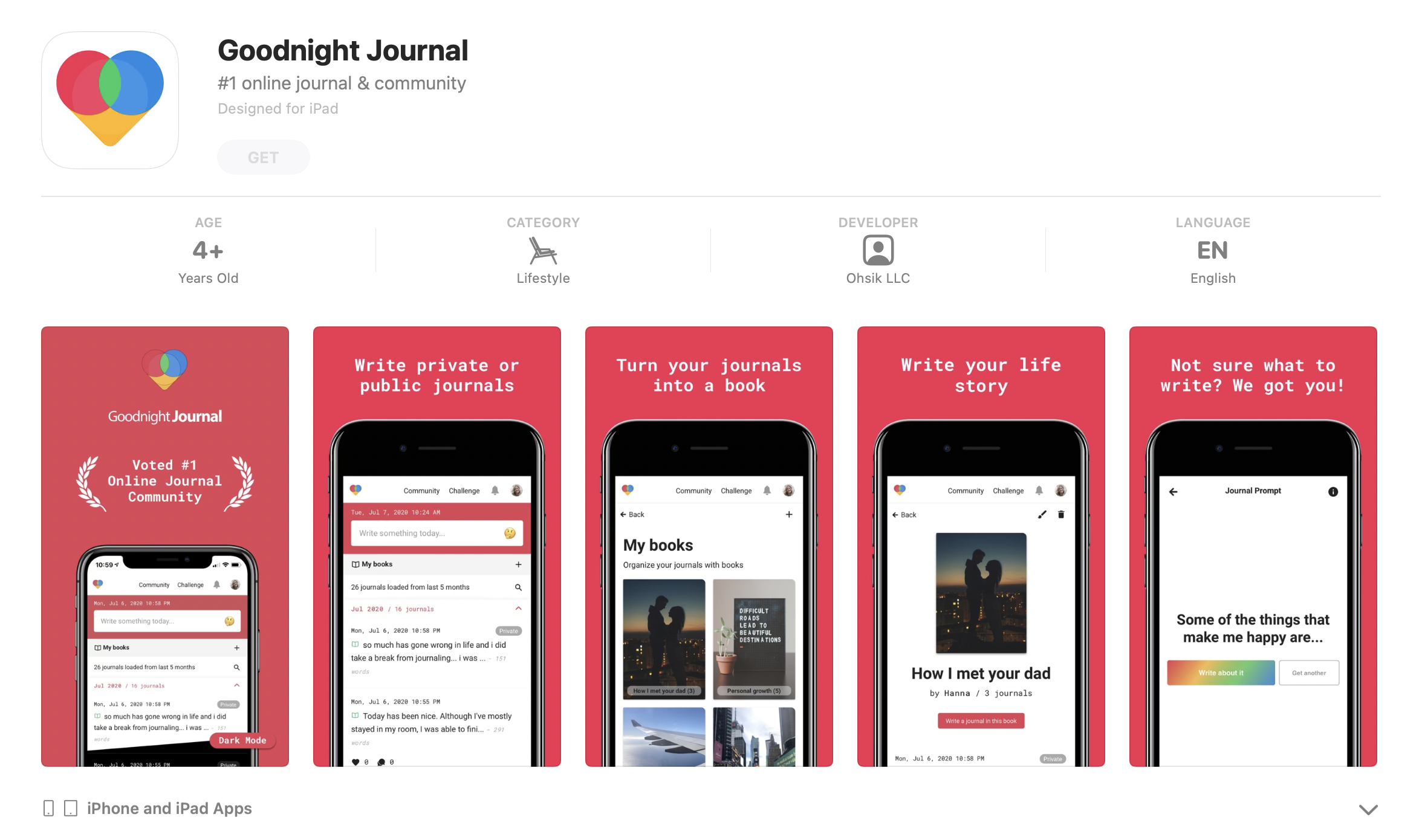
Goodnight Journal is built around one idea: writing should feel easy and safe. The interface stays out of the way, your entries are private unless you choose to share them, and nothing about the app pressures you to perform.
Its real distinction is the choice it gives you. Most journal apps are sealed boxes — you write, and that is the end of it. Goodnight Journal lets you keep an entry private or publish it to a community of other journal writers. That matters more than it sounds. Writing something difficult and discovering that strangers have been through the same thing is a different kind of relief than writing it down alone.
It also runs the same way across desktop, phone and tablet, so the journal is wherever you happen to be when you want to write.
Journey
Journey is a strong all-rounder with a particularly good Android experience. You can attach photos and other media to entries, and it records context like weather and location automatically, which turns out to be a surprisingly effective memory trigger when you read back months later.
It also leans gently into self-improvement, with prompts and coaching-style nudges built in. If you want your journal to double as a place to work on habits and goals, Journey is the natural fit.
Penzu
Penzu is the most straightforwardly private option here. It is a plain, calm writing surface with a strong emphasis on keeping your entries locked down, and it has been doing this for long enough to be genuinely dependable.
There are no social features and no clever extras. If what you want is a diary nobody else will ever see, that is exactly the appeal.
Daylio
Daylio is the one to pick if you have tried journaling before and given up. It does not ask you to write. It asks you to choose a mood and tag your activities, which takes about ten seconds.
Over time those ten-second entries become data: clear charts showing which parts of your life consistently make you feel better and which do not. You can add written notes whenever you feel like it, but the habit survives on the days you do not.
Diaro
Diaro is for people who want their journal organised. Every entry can go into a folder and carry tags, so a year of writing stays navigable instead of becoming an undifferentiated pile. There is a full-screen writing mode for concentration, and cloud sync so your entries follow you to a new device.
If you are the sort of person who wants to pull up everything you wrote about one topic across three years, this is the app that makes that easy.
Which one should you choose?
They are all good. The differences come down to what you want from the habit:
- You want privacy, but also the option to be heard — Goodnight Journal
- You want media and automatic context — Journey
- You want a sealed, private diary — Penzu
- You want the habit to survive a busy week — Daylio
- You want structure and searchability — Diaro
Our own favourite remains Goodnight Journal, mostly because the community keeps us writing on the days we would otherwise skip. For a fuller comparison, see our best personal journal apps of 2026 roundup.